

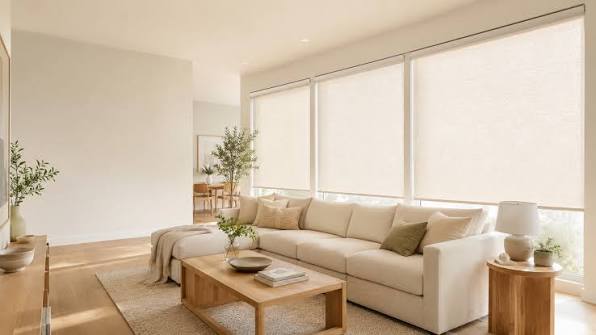
Daylight makes a room easier to use, but an uncovered window can also expose it to neighbours and passers-by. Sheer roller blinds filter incoming light while softening the view through the glass. Their effect depends on the fabric, the position of the window and the difference in brightness between indoors and outdoors. A practical choice starts with knowing how the fabric changes the light that enters a room and what people can see through it.
How Sheer Fabric Filters Daylight
A sheer fabric sits between the glass and the room, reducing the directness of incoming light without blocking it completely. When lowered, sheer roller blinds soften the view through the window while allowing daylight to pass through the fabric. The result varies with the weave and the strength of the sun. A fabric sample held against the glass gives a clearer impression than one viewed under indoor lighting.
Direct sunlight can still create glare through a sheer blind. For a desk facing a bright window, the blind’s position and fabric choice deserve a practical test before purchase. Moving a screen away from the window can also reduce reflections.
What Daytime Privacy Means
During daylight, a brighter exterior generally makes it harder for someone outside to see into a darker room. Sheer fabric further obscures the view, but it does not create a solid barrier. Shapes and movement can remain visible, particularly when a person stands close to the window.
Privacy changes with the light. On an overcast day or in a brightly lit room, the view through the fabric can be clearer than expected. A household should test a sample from outside at the times when privacy matters, including when people are near the glass.
Choosing The Fabric Weave
The weave affects both visibility and the amount of light that passes through. A more open weave generally preserves more of the outside view, while a denser fabric obscures more detail. Neither choice guarantees privacy under every lighting condition.
Colour also changes the appearance of a window covering. A pale fabric can create a softer look against a light wall, while a darker fabric gives the window a more defined appearance. Samples should be viewed against the window rather than selected solely under shop lighting. The room’s outlook matters as much as its décor.
Matching Blinds To Each Room
A living room facing a street has different needs from a room overlooking a private garden. In the street-facing room, a denser sheer fabric can limit views of people seated near the window. A less obstructed outlook might suit a room where privacy is less of a concern.
Window direction matters for glare. A room that receives direct afternoon sun needs a test at that time, rather than a decision based on morning light alone. Bedrooms also need separate consideration because daylight privacy does not address darkness for sleep.
Adding Privacy After Dark
At night, indoor lights can reverse the daytime privacy effect. A person outside may see silhouettes or interior details through a sheer blind when the room is brighter than its surroundings. Closing the sheer layer alone should not be treated as a reliable night-time privacy measure.
A separate blockout blind or curtain gives a household another option when darkness or greater privacy is needed. Each layer should operate without catching on the other. Before choosing a combination, check the available space around the window and consider whether the extra covering will interfere with handles or doors.
Checking Fit And Everyday Use
A blind needs enough coverage for the window and a clear path when raised or lowered. Side gaps can reveal parts of a room even when the fabric obscures the view. The mounting position affects those gaps, so check the window recess and nearby obstructions before ordering. Minor home upgrades like this can make a big difference.
Care requirements vary by fabric. Check the manufacturer’s instructions before cleaning, and don’t assume water or a cleaning product suits every material. Where children are present, ask about child-safe operation and keep any cords secured according to the supplied instructions.
Conclusion
The best test is a fabric sample held at the actual window, with someone checking the view from outside. Repeat the check in daylight and after the room lights are switched on. This reveals whether the sheer layer provides enough privacy for daily use or needs a separate blockout covering. For rooms affected by glare, test the sample when direct sun reaches the glass. A little observation before ordering makes the final choice more practical.